

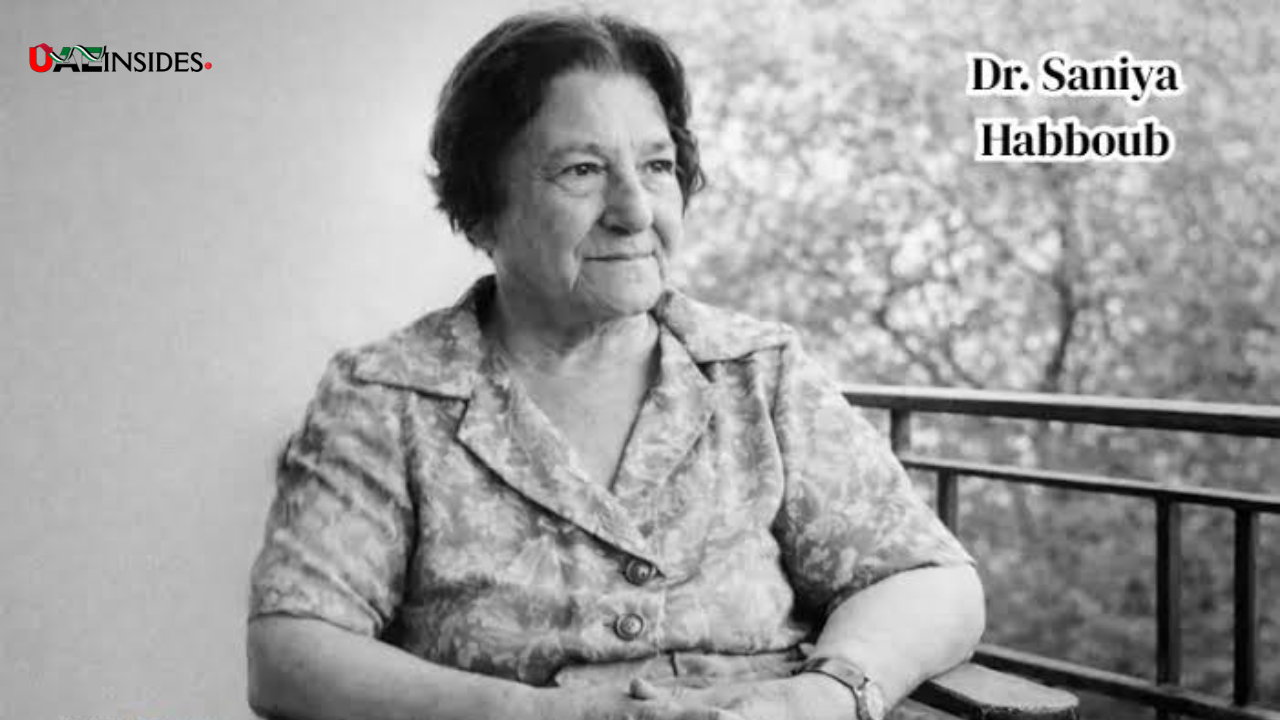
Imagine yourself standing on a pier in Beirut in the summer of 1926. You are a young Lebanese woman going solo as the ship taking you to New York is leaving the city where you grew up. There are no guarantees that you are going to succeed. The culture dictates that women should stay at home. The native medical schools do not even allow you to enrol. Yet, you leave.
This young woman is Dr. Saniya Habboub, the woman whose brave steps led to the chain of events causing revolution in women’s health in Lebanon and the whole Arab world.
If you wonder what was the name of this amazing woman, why Google decided to put her on the Doodle and why this woman’s story is told even now, you are in the right place. This paper will tell you everything you need to know about Dr. Saniya Habboub.
Dr. Saniya Habboub: An Outstanding Lebanese Woman
Dr. Saniya Habboub was a Lebanese physician and an outstanding humanitarian activist. Her lifetime covered 1901–1983. She was capable of doing the things that most women of her generation would be hardly able to dream of. She was the first Lebanese woman studying abroad in a medical school, the first foreign-trained woman physician founding a private clinic in Beirut, and the co-founder of the Lebanese Red Cross. This woman lived in the country where women’s education and professional activities were not encouraged. However, she managed to do something extraordinary and change the fate of her compatriots forever.
Childhood and Early Age in Beirut — The Family That Promoted Education
Dr. Saniya Habboub was born in Beirut in 1901. At that time, this city belonged to the epoch of the last Ottoman influence and transformation to modernity. Most of the women got married in childhood, lived a domestic life, and could not pursue their professional interests.
However, this woman grew up in the family that rejected the rules imposed by the society on women.
The father of Dr. Habboub was the respectable Lebanese leather merchant – Moustafa Habboub. He was a pragmatic man, who believed in the capabilities of his daughter. Her mother Adla al-Jazairy could not read or write; however, she highly appreciated educated women and made it the top priority of her family to educate her daughter. This combination of the mother who could not attend classes and the desire to change it made Saniya Habboub unique since her childhood.
Academic Education — From Beirut to Philadelphia
Dr. Saniya Habboubshowed her intellectual abilities at a very young age. She got the education in American Junior College for Women located in Beirut and continued studying in the American University of Beirut (AUB) — one of the most prestigious universities in the region. The girl was an excellent student, ambitious, and passionate about medicine.
There was one problem, though. AUB did not accept women as students of the medical faculty.
It could be the end for most of the young women; however, it became another step for Saniya. Once, she heard the story about a woman physician coming from Damascus and graduating from the United States before returning to the hometown. The girl decided to do the same.
Thus, in August 1926,Dr. Saniya Habboub departed to Philadelphia to become the first Lebanese woman studying medicine overseas. She enrolled in Women’s Medical College of Pennsylvania, one of the few institutions educating women in medicine. She supported herself by teaching while attending lessons. She adapted to the new culture, language, and academic environment and coped with the difficulties.
Historic Achievement in Medicine — Dr. Habboub and Her Graduation
Graduation Day Which Made History
On June 10, 1931, Dr. Saniya Habboub received a medical degree in gynecology and obstetrics at the Women’s Medical College of Pennsylvania. It may seem to be an ordinary statement; however, the graduation day of Dr. Habboub was quite exceptional.
She became not just the first Lebanese woman who graduated from that institution. The student of AUB became the only Arab graduate of Women’s Medical College of Pennsylvania. Such a historic significance of the event was recognized by the university by inviting the Lebanese historian and a professor of Princeton University to give a speech at the commencement ceremony in her honor.
It is enough to say that the school stopped its usual ceremonies to highlight the importance of the day when Dr. Habboub got her diploma. Such an action was an indicator of the significance of this woman.
Also, Dr. Habboub expressed her appreciation for this historic opportunity in an amazing way – she created a scholarship in her name to provide other students with the chances for their success.
She chose obstetrics and gynecology as her speciality voluntarily. Lebanese women required such a field of expertise — most of them were not willing to see male doctors because of cultural reasons. Thus, Dr. Habboub became not just a specialist but a bridge between medicine and local women’s community.
Additional Year — Training as an Intern
After graduation, Dr. Habboub did not decide to return to her native country immediately. She stayed in the United States for one year to complete an internship in gynecology and obstetrics. This decision characterizes her personality perfectly.
She was not interested in the diploma; instead, she wanted to become a good specialist. She returned to Beirut to be not just the first foreign-trained woman physician in Lebanon but also a good doctor.
The additional year of training made the difference in her career. After returning to her homeland, the physician became competent and confident.
Returning to Beirut — Creating a Private Clinic, Revolutionizing the Community
Founding a Clinic in Bab Idriss
Dr. Habboub returned to Beirut in 1932. Immediately after her return, she founded a small clinic in her native Bab Idriss district and became the first foreign-trained woman physician running a private practice in Beirut. It was a bold move, though not an easy one.
At first, her clients could not understand who Dr. Habboub was. They thought that she was just a midwife and not a specialist with the high qualification. It was hard to imagine that a woman could be a physician in Beirut at that time. Nevertheless, Dr. Habboub did not give up and proved her skills and competence by working in her clinic.
Gradually, she managed to gain the confidence of the locals. Her good reputation spread across the town and she established connections with the neighborhood, visiting her patients and consulting them.
Free Healthcare for Women, Unable to Pay
Here comes the moment when the story of Dr. Saniya Habboub goes beyond medicine and becomes something amazing.
From the very beginning, her clinic offered free services to women, who could not afford her fee. In Lebanon, healthcare was a luxury and accessible for the rich only. However, Dr. Habboub decided to treat women regardless of the ability to pay her money. It was not an advertisement or status she sought; it was her personal philosophy.
The patients called her “the mother of the poor”. Such a nickname was not given by the government or a committee. It was the local women, who were coming to Dr. Habboub’s clinic without having anything but her gratitude. For them, she was not a historic symbol. She was just the person who appeared at a time when nobody did.
This dedication to the provision of free healthcare lasted for more than half a century. More than fifty years of treatment regardless of women’s financial situation. Taking into consideration the economic, social, and political instability, which Lebanon faced during this period, including the Civil War and the destruction of her clinic in 1975, the constancy of Dr. Habboub’s actions seems unbelievable.
Beyond Clinic Activities — A Woman with Extraordinary Humanitarian Influence

Co-Foundation of the Lebanese Red Cross
Dr. Habboub was influential not only in the clinic. She contributed to the process of developing the Lebanese Red Cross as one of its co-founders.
With the help of Lebanese Red Cross, Dr. Habboub was building the systems of emergency care, recruiting volunteers and organizing them, providing services in public health, and establishing health infrastructures in Lebanon. As for this country, there were plenty of emergencies — military, political, and humanitarian. Lebanese Red Cross became a savior for a lot of people and Dr. Habboub was one of the persons who was creating it.
Community Organizations and Institutional Participation
Not only Red Cross was the place where Dr. Habboub showed her professionalism. She participated in the activities of many community organizations: she was a board member of Muslim Orphans’ Home, Young Women’s Muslim Association, and Maqassed Hospital. Also, she worked as a school physician of the American School for Girls — the same university, which educated her. It was a full circle in her professional life.
Also, besides these official positions, she mentored young medical students and advised the aspiring doctors when there were almost no female role models in Lebanese medicine. She realized that her influence would grow if she would invest in other women.
Recognition and Resilience

Health Medal of Merit — 50 Years of Active Service of Dr. Habboub
In 1982, the government of Lebanon gave Dr. Saniya Habboub the Health Medal of Merit, commemorating her fiftieth year of active practice. The significance of this event deserves attention.
Lebanon had the Civil War, which lasted for more than a decade. Seven years ago, her clinic in the district of Bab Idriss was looted and destroyed. Another person would retire or leave. However, Dr. Habboub continued her activities. She was seeing patients and helping people.
The government’s decision to honor her during the Civil War and not after it is an obvious confirmation of the fact that her contribution was not just historic but current in one of the darkest periods in the country’s history. It is the official recognition of the state of the fact that this woman’s deeds matter.
Street Named After Dr. Habboub — Eternal Recognition in Beirut
After her death in September 1983, at the age of 82, the Lebanese government decided to give Dr. Saniya Habboub one of the greatest honors a city can give to a person — it gave her name to a street. Today, Saniya Habboub Street is located in the Ramlet al-Baida district of Beirut, and it is an eternal mark of the place this woman has in the history of her hometown.
There is something symbolic in the street bearing the name of a woman doctor in a city, where decades ago, women could not even enter the medical school. Every person, walking along the street, even not knowing Dr. Habboub’s biography, is passing her legacy.
Google Doodle — Her Story Became World Wide in 2022
On June 10, 2022, — the 91st anniversary of her graduation from the Women’s Medical College of Pennsylvania — Google decided to honor Dr. Saniya Habboub with a Doodle on its website. For one day, the face and biography of this woman, unknown to a lot of people, reached billions of people in different countries of the world.
The reaction to this news came instantly. Trends related to Dr. Habboub became popular in different countries of the world, which were far from Lebanon. People from the countries as different as Brazil or Britain started googling her name, trying to find out who she was.
The beautiful irony of this situation is impossible not to note. A woman, who was once mistaken by the citizens of her town for a midwife, became the face that billions of people saw opening the internet. This is not a nice story. This is justice, which is delayed, but delivered.
Why Is Dr. Saniya Habboub Important in 2025 and Beyond?
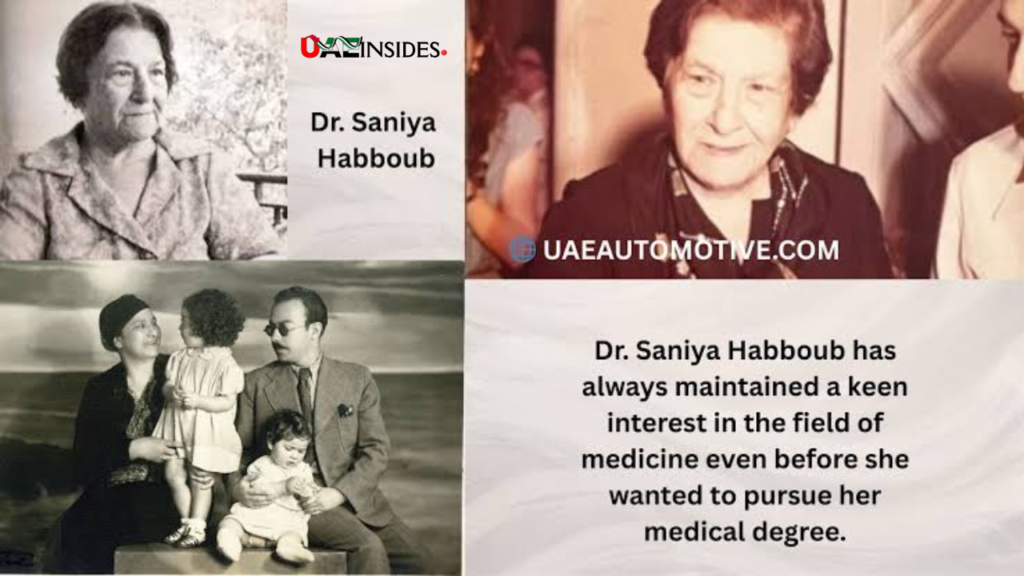
Her Influence on the Development of Medicine among Women in the Arab World
You might think that Dr. Habboub’s biography is historic and not related to our times. However, her influence can be traced nowadays.
She was making the path for women, who wanted to get an education in medicine in the Middle East. Nowadays, female doctors are working in every major hospital, clinic, and research center in Dubai, Abu Dhabi, and Sharjah. They are specializing in pediatrics, surgery, public health, and hospital administration. This situation did not appear out of thin air. It developed from the grounds, which were prepared by Dr. Habboub and other pioneering women.
Every time you see a female gynecologist in Beirut, or encounter a woman surgeon in Dubai, or read about a Lebanese woman conducting a public health project, you are seeing the result of Dr. Habboub’s work. She did not just create a clinic. She opened the door, which is never closing.
Role Model for Girls in STEM
As a result of numerous studies, it has been proven that representation is crucial. The chances that young girls see professionals of some fields increase if they see these specialists of the opposite gender in their profession. Dr. Habboub’s biography is exactly about representation, although the concept did not exist in the times when she was living.
She had no role model in Lebanese medicine. Thus, she became the role model herself — for herself first and then for all the women coming after her. Now, her story is giving the permission to the girls of Lebanon and Arab countries, and beyond to follow their dreams, which seemed to be impossible once.
According to the UNESCO data about women in STEM and WHO reports on gender equality in healthcare, the gender gap in medicine is decreasing the fastest in the regions where female pioneers have historical visibility. Dr. Habboub is exactly this kind of visible pioneer.
Important Facts about Dr. Saniya Habboub
If you want to get a brief summary of the biography of Dr. Habboub, here is everything you should know:
- Full name: Saniya M. Habboub (also written as Saniyeh, Sania, or Saniyya)
- Born: 1901, Beirut, Lebanon
- Died: September 1983, aged 82
- Medical specialty: Gynecology and obstetrics
- Medical school: Women’s Medical College of Pennsylvania, Philadelphia, USA
- Graduation year: June 10, 1931
- First clinic location: Bab Idriss neighborhood, Beirut
- Major organizations: Co-founder of the Lebanese Red Cross; board member of the Muslim Orphan’s Home, the Young Women’s Muslim Association, and Maqassed Hospital
- Government award: Health Medal of Merit, 1982
- Commemorations: Saniya Habboub Street, Ramlet al-Baida, Beirut; Google Doodle, June 10, 2022
- Personal life: married to Muhammad al-Naqqash, a journalist; had two daughters
Frequently Asked Questions about Dr. Saniya Habboub
Who is Dr. Saniya Habboub?
Dr. Saniya Habboub (1901–1983) is a Lebanese medical doctor and the first Lebanese woman to get a medical degree abroad. She graduated from the Women’s Medical College of Pennsylvania in 1931 with specialization in gynecology and obstetrics, returned to Beirut to open the first clinic run by a foreign-trained female physician, and devoted more than fifty years to her work — providing free services for her community.
Why is Dr. Saniya Habboub famous?
She is famous for three historic achievements: she is the first Lebanese woman to study medicine abroad, the first foreign-trained woman physician to open a private practice in Beirut, and a co-founder of the Lebanese Red Cross. Her biography attracted global attention in June 2022 when Google created a Doodle in honor of her on the 91st anniversary of graduation from medical college.
What medical specialty did Dr. Saniya Habboub have?
Dr. Habboub specialized in obstetrics and gynecology. It was her conscious choice of the field to serve Lebanese women, who had extremely poor access to healthcare, especially low-income women, who were unable to pay for private medical services. Her clinic offered free services for such women.
Why did Google honor Dr. Saniya Habboub and when?
Google honored Dr. Saniya Habboub with a Doodle on June 10, 2022, which is exactly 91 years after she graduated from the medical college in the United States in 1931. Google highlighted her as a pioneering woman defying the norms of her society and studying medicine abroad, promoting women’s healthcare in Lebanon and the Arab world.
What is Dr. Saniya Habboub’s legacy?
Her legacy is multidimensional. Firstly, personally, she proved that Arab women can be successful doctors during the era when this achievement seemed to be impossible. Secondly, professionally, she provided free gynecological care to poor women in Beirut for more than fifty years. Thirdly, institutionally, she co-founded the Lebanese Red Cross and took part in the activities of multiple community organizations. Finally, the Lebanese government awarded her the Health Medal of Merit in 1982, a street in Beirut was named after her, and her biography is inspiring women in medicine in the Arab world and beyond.
Conclusion
In 1926, a young Lebanese woman was stepping onboard the ship to depart alone to a future which was inaccessible for any woman in her country. She had no guarantees of success, no map and no one to show the way. All that she had was her determination that she could be a doctor, that women deserved good healthcare and that somebody had to make the first step.
Fifty-seven years later, the government of Lebanon gave her a medal. A street in Beirut bears her name. Google put her face in front of billions of people. Somewhere right now, a young woman in the Arab world is deciding to study medicine — because the door Dr. Saniya Habboub kicked open was never closed.
Her biography is not just history. It is the permission slip for every girl, who has been told that a dream is too big, that she does not fit into some room or a door is not made for her to pass.
She proved all of it wrong. And because of this, you can stand on her shoulders.
Read Also: Union Bus Station Ticket Counter
